While the transaction of memes (yes, even dank ones) seems relatively easy and hassle-free, it is as fraught with censorship as any other piece of information that gets digitized.
The very format of a meme calls for a platform where anybody can use it to represent themselves. It is a medium which facilitates the telling of a truth by making use of something that has already been created and floating in the media to symbolize an idea. This replication is essentially what leads to virality. For a meme to become viral, evidence suggests that it needs to be genuine, one that answers questions, makes relatability easier and one that can be easily registered in and appealing to the human brain. In a way, they are some of the most perfect tools for satire.
What’s a subversive meme?
If we examine the history of satire in the Indian context of visual culture, we immediately come across the illustrations by Gagandrenath Tagore to as recent as R. K. Laxman. These illustrations are full of political commentary and were an attempt to reflect the social and political conditions of that given era from a reformist lens. These visual illustrations were an important device of storytelling- which were localized to reach a wider audience. While graphic illustrations, cartoons and comics continue to serve the purpose of image-text interaction in furthering certain ideologies, in contemporary times, memes have come to serve a similar purpose with relatively more flexibility for modification. As memes borrow from several elements of pop culture, there are several subversive possibilities of memes which will explore in the course of this article. These eventually lead up to memes becoming crucial cultural devices by themselves. Thus we believe in the potency of memes turning into effective tools for communication and want to explore how censorship governs and restricts the extent of subversion that memes rampantly employ.
Given the adept nature of memes for subversion of a given idea, we would like to state that memes are not inherently subversive. Are there possibilities for subversion? Absolutely. But are they absolutely subversive in nature? Not exactly. Replication and repetition are two elements of memes that foster dynamic meaning making as they travel across sites and contexts. However, given the viral nature of circulation of memes across social media platforms, they become important sources of agency for several people. When exploring the increasing presence of memes on social media, it is interesting to look at one force which controls the nature and reach of memes- the algorithm.
Agency versus Algorithm
According to digital creator Ankit Srivastava, censorship comes through two mediums primarily- censorship by the algorithm of the app/online platform and self-censorship.
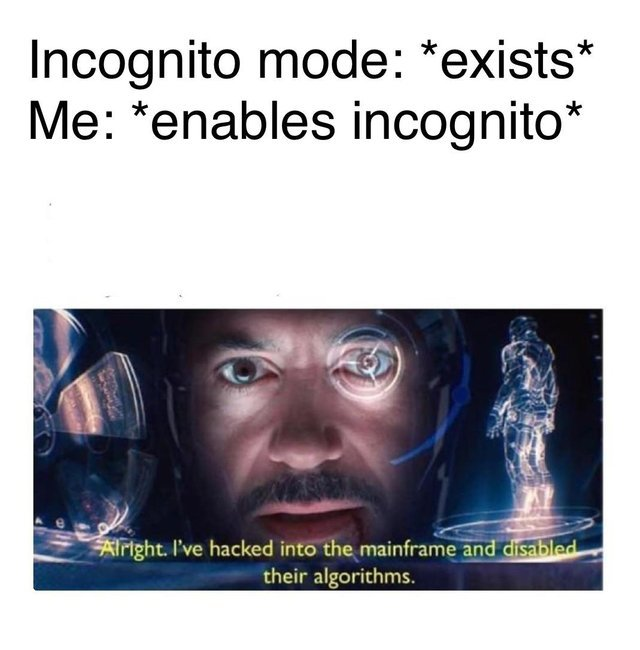
The censorship issued by the algorithm of online platforms, Instagram in particular affects the reach of any particular meme to the ‘Explore’ section, thereby affecting the number of views it gets. The algorithm issues a “non-family friendly” clause to the creator and it is then up to them whether to continue anyway, or comply and reserve their viewership. Often creators self-censor their content in order to better appeal to a larger audience, hoping to make their meme more or less universal. However it is important to understand that even in such a scenario, the creators are largely appealing to the audience in and of the mainstream, which brings the danger of confining the marginalized to the margins. This further leads to the normalized overrepresentation of the upper middle class, thereby making the divide more and more visible.
Another aspect to self-censorship is its relation to creators who want to deliver their content in the truest manner possible and in that regard, self-censorship is restricted to making the online networking communities more and more comfortable with the content in question. For such content, the makers must rely on the virality potential of their meme.
(Un)Safe Spaces
Censorship in the context of memes is interesting to explore in terms of state control and use of memes to contest it. Let’s start by discussing the relevance, scale and participation in online memetic communities. We’ve heard of popular 4chans and 9GAGs and the huge community of users who actively generate content and circulate it there. If we explore the reasons leading to circulation of memes- it’s because of the interactive and participatory functions that such communities serve, in a way democratizing the content that can go under the meme format. While appreciating their democratic nature, it is also important to be mindful of the scale of violence that online communities, under anonymity can ignite. Cyberbullying cases are galore and worth checking into before committing to a community. An analysis of comments on 4chan by VICE has indicated a spike in hate speech by 40% since 2015. Two key things that help such platforms escape reported violence are- coded language (not explicit) and dynamic reach to servers. If one server rejects their site, they can set it up on another. So while being a platform for expression and casual in nature, these also act as validation for the darker sides of humanity and that’s a tension that needs easing.
In the dark times will there also be memeings?
A key point, as proposed by Professor Sangeet Kumar, is how memes act as a disguise to dissenting speech due to the garb of satire and humour that they are embedded in. They provide a space for to further alternate discourses often looked upon as dissent. Since the very nature of memes is in stark contrast to academic debates and furthering of ideologies, they have a wider reach and grip over their audience. This also plays into the increasing levels of cultural literacy that becomes accessible to a large number of the population. Social media platforms that facilitate the circulation of memes also ensure that recirculation is made easy- just a click, a share, a retweet away (Kumar, 2015).
It’s not wonder then that memes as a voice of dissent have come to assume a central place in several social movements. In censorship heavy countries like China, the ‘cute cat memes’ are an effective way in which activist messages can be embedded and conveyed. An Xiao Mina, author of Memes to Movements: How the World’s Most Viral Media is Changing Social Protest and Power writes about how social movements have become ‘transmedia hubs’- a term coined by Sasha Constanza-Chock, and how memes play into the larger discourse of creating and reproducing symbols. The Umbrella movement can be an example here, whereby the umbrella was used as a symbol by Hong Kong protestors demanding democracy. It was used as a symbol in several memes to escape narrative control by censorship authorities.
Hence it is interesting to explore the blurry lines between the silly and serious nature of memes, as proposed by Mina. Political messages are often embedded within memes and animals that represent memes like cats or goats and care is taken for its meaning to be culturally entrenched, so as to engage the audience on a deeper level than a mere semantic one.
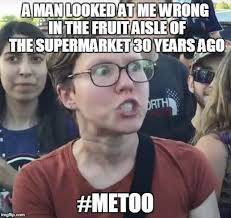
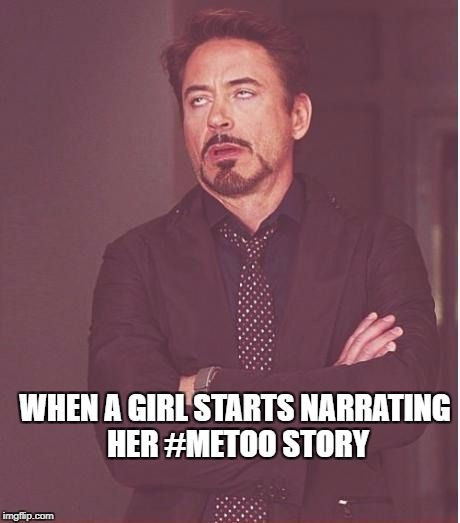
However memes are not always used as tools to further empower a social movement. There have been instances when memes were used to ridicule a movement that gained traction on the internet. Owing to the humour that is inherent in memes, they were used to ridicule the #metoo movement by humiliating people who used that platform to voice their experiences.
The Me Too movement was started by activist Tarana Burke on Myspace in 2006 to help other women with experiences of sexual harassment to stand up for themselves. A decade later, actor Alyssa Milano popularised the movement on Twitter turning it into a hashtag post the Harvey Weinstein sexual abuse cases. The path-breaking movement, which recorded 19 million tweets with the same hashtag within a year, led to survivors’ statements being viewed with much skepticism. Disbelief in survivors’ narratives is essentially a viral idea that perpetuates the hegemonic practice of mostly cis-het men twisting a narrative to suit their own selves. One of means employed for this counter movement was making memes and circulating them.
TikTok Takeover
A relatively new platform that has literally transformed the very format in which memes are presented is TikTok. Video memes aren’t new, YouTube has them too, but the 15s feature of TikTok videos makes it reach a wider audience because of the ease with which one can produce and upload a video on the platform. A 15s tap away and we can watch about 4 memes in under a minute. TikTok curates our feed based on our liking, which it records based on what we see and its algorithm functions accordingly. However, beyond these various offers that TikTok makes to reach out to and attract more users, there are also reports of its unclear and skewed “community guidelines”.
TikTok’s community guidelines are largely vague and secretive, reports suggest that moderators are asked to eliminate content that makes a mention of historical anti-state events like the Tiananmen Square and no mention of listed political leaders. Along with this, TikTok heavily allegedly monitors several parameters before sharing content across its algorithm- standards of beauty, the background in your video, class, race, etc. Censoring the representation of traditionally marginalized communities and altering political speech explains how TikTok remains controlled. Such furthering of normative ideologies serves as a problem for so many TikTokers who look at the space as a free platform of self-expression.
This could also explain the niche community of Indian TikTok v/s other TikToks. The usage of TikTok has been starkly different from other places where it has gained popularity. Along with actively repressing narratives from the oppressed communities, there have been reported incidents of violence which stemmed from TikTok. In one instance, a man from Tamilnadu yelled casteist slurs and threatened violence against the Dalit community. When protests broke out in response to such an atrocity, the accused shifted the blame onto his friend who encouraged him to produce and upload such content and went on to kill him. Thus it becomes important to acknowledge the violence that digital platforms can foster, and understand the nuances of censorship when it comes to hate speech.
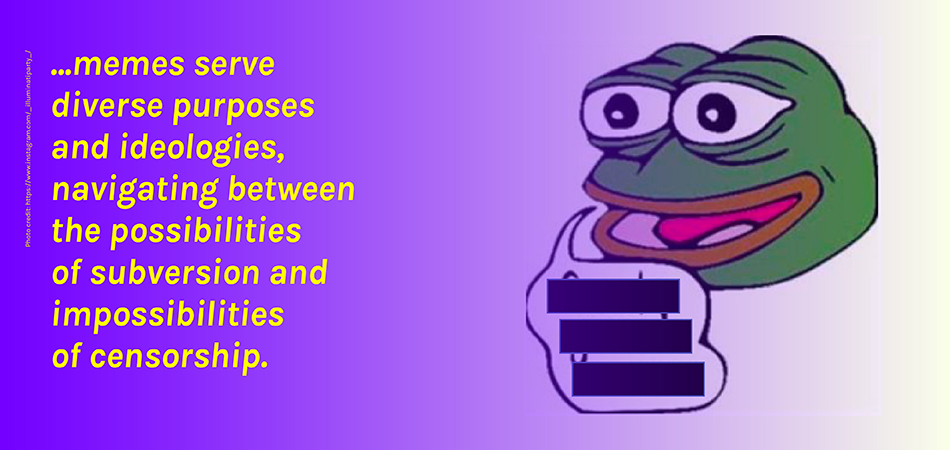
Memes as tools that effectively aid communication, constantly negotiate their existence and prevalence. Whether through organic virality or through strategic co-option, memes serve diverse purposes and ideologies, navigating between the possibilities of subversion and impossibilities of censorship.
References
Memes: Innocent fun or internet bullying?: https://world.wng.org/2015/03/memes_innocent_fun_or_internet_bullying
Memesis: community and self-definition in the age of memes: http://digicult.it/internet/memesis-community-and-self-definition-in-the-age-of-memes/
Instagram Memes: The Best Brands Embracing Memes on Instagram: https://buffer.com/resources/the-meme-ification-of-instagram
The Age of Post-Authenticity and the Ironic Truths of Meme Culture: https://medium.com/s/story/post-authenticity-and-the-real-truths-of-meme-culture-f98b24d645a0
Meme communities and how to meme correctly: https://www.diggitmagazine.com/interviews/memes-communities
Instagram and Algorithms [Text Messaging]. Instagram Chat with Ankit Srivastava.
Contagious memes, viral videos and subversive parody: The grammar of contention on the Indian web: https://doi.org/10.1177/1748048514568758
No laughing matter: The Politics of Satire: https://www.nationalheraldindia.com/india/no-laughing-matter-the-politics-of-satire
Revealed: How TikTok censors videos that do not please Beijing: https://www.theguardian.com/technology/2019/sep/25/revealed-how-tiktok-censors-videos-that-do-not-please-beijing
Memes to Movements: https://datasociety.net/library/an-xiao-mina-memes-to-movements/
Invisible Censorship: https://theintercept.com/2020/03/16/tiktok-app-moderators-users-discrimination/
We Analysed More Than 1 Million Comments on 4chan. Hate Speech There Has Spiked by 40% Since 2015: https://www.vice.com/en_in/article/d3nbzy/we-analysed-more-than-1-million-comments-on-4chan-hate-speech-there-has-spiked-by-40-since-2015
19 million tweets later: A look at #MeToo a year after the hashtag went viral: https://www.usatoday.com/story/news/2018/10/13/metoo-impact-hashtag-made-online/1633570002/
New investigation reveals TikTok’s compliance in spreading hate and violence in India: https://screenshot-magazine.com/technology/social-media/tiktok-hate-india/
]]>Deepika Mhatre joined Leadership Programme Fellow Laxmi Krishnan on 29 May 2020 in the run up to the launch of The Meme Project.
They talked about how humour can be subversive and how Deepika’s stand-up sets have forced audiences to confront their own class biases. They also discussed virality, identity and the stand-up comedy scene today.
Video editor: Nikita Saxena
Talk Meme to Me, is the podcast chapter of The Meme Project led by the Godrej India Culture Lab’s Leadership Program Fellows of 2020! We bring to you Political Memeings, a conversation with meme scholar Krishanu B Neog. Come along as Krishanu and our host, FP2 decode the politics of meme making and meaning making in contemporary digital India. Krishanu is a doctoral candidate at the Jawaharlal Nehru University, currently studying the role of memes in digital populism and social media. He has been associated with a project that looks into the politics of religion and national belonging in South Asian online spaces.
Host: Aditya Talpade aka FP2
Produced by: The Godrej India Culture Lab + Leadership Programme Fellows Batch of 2020
Music: Weed Flora by swimrabbit
Editor: Pratik Dagaonkar
Podcast Transcript
Aditya aka FP2: Hello and welcome to our podcast- Talk Meme to Me, I’m FP2 your host who is so incredibly handsome, they had to give me the only job that did not reveal my face. But all jest aside this podcast is part of The Meme Project led by the Godrej India Culture Lab’s leadership program fellows that seeks to figure out the origin, evolution and transmission of memes and memetic threads in India. That is to say we are figuring out the way memes began, got passed around and evolved over time. Ladies and gentlemen before we begin/ continue with this podcast I’ll have you know that due to the current state of the world and.. Everything.. We have recorded this podcast remotely amongst a lot of technical constraints so please excuse any issues with audio quality… and blame Skype. Today’s guest is a doctoral candidate at the Jawaharlal Nehru University, currently studying the role of memes in digital populism and social media. He has been associated with a project that looks into the politics of religion and national belonging in South Asian online spaces.
He has a master’s in developmental studies from TISS that is Tata Institute of Social Sciences, Mumbai. His work is so good, in fact, that when he agreed to do this podcast with us, I almost sprained my ankle dancing. So please, everyone give a huge round of applause for Krishanu B Neog.
Krishanu B Neog: Thank you Aditya for that effusive praise. It’s almost like you’re setting me up for a fall!
Krishanu: Thank you to you and thank you to your colleagues in the Godrej India Culture Lab and the Meme project for having given me this opportunity. And I would also at this moment like to thank all my friends who pushed me to go ahead with the podcast you know, I was a little bit hesitant as I had never done something like this before. And I would also like to thank them for all the help that they have provided me in my research in the last few years, you know, finding out meme sites for me, helping me translate memes sometimes I don’t get the references, especially when it comes to films from down south. So, you know, telling me that this screenshot is from that movie, and in that context and so on. So yeah, let’s begin Aditya.
FP2: Hahaha..Yeah, honestly, even I’d like to thank your friends so much because, you know, they allowed us to interview or to have a conversation with someone as great as you like, I’ve been reading your through work and it’s honestly amazing, like, seriously.
Krishanu: Yeah, thank you again. You are like really boosting my self esteem over here.
FP2: As someone who studies memes and how internet memes became such a huge global phenomenon today, because you know, they’re practically everywhere.
Krishanu: Well the reason that internet memes have become so huge today, I think, would be because of two dynamics that are inherent to the whole mimetic culture. And I would like to categorize them as inclusive and exclusive, you know, the dynamic that leads to inclusion of more and more people and at the same time, a dynamic that leads to exclusion of some people. So, in the inclusive dynamics part, I would like to include the various technological reasons such as, you know, the advent of Adobe Photoshop in 1990. And its subsequent iterations that let you play around with images, insert texts into images, you know, and form image macros thats the traditional format of the meme, format of a meme, you know you have an image and then you have a text on top and at the bottom. Another important factor would be the advent of web 2.0, which is a term that Tim O’Reilly had coined, and its associated concepts such as ‘Prosumers’- an amalgamation of the words producers and consumers. So we are no longer just passive consumers of mediated content. We are also expected to be producers of media, and other concepts such as ‘participatory culture’, which is a term by Henry Jenkins, as you know, very well i think he had a master class with you guys. You know, some time. So participatory culture is a huge, you know, explanatory concept when you study memes. So it involves looking at technology that has made it easier for people to share their creative artistic expressions with each other online and create connections. And these connection in turn lead to communities and these communities are actually at the root of memetic culture in all those anonymous and pseudo anonymous online speech spaces such as image boards, and the cheeseburger network of websites. These are the spaces where meme making actually began.
Another important factor driving you know, memetic culture is popularity is the playfulness that is involved in memes, you know, the kind of juxtapositional humor you see where you take elements from very, very different parts of your life or parts of culture and politics and mash them together and remix them to create something entirely new. So, you take the faces of Chief Ministerial candidates in the Delhi elections and superimpose them on the faces of wrestlers in the WWE match, you know, that kind of thing. And this sense of being playful, like a trickster, you know, pushing the boundaries of what is acceptable and unacceptable. This is an area that I’ll go into more detail, I hope to as the conversation progresses. And memes are so popular simply because there’s such an easy way of communication, you know, they’re light they’re humorous, they’re banal, and almost inconsequential to the point where somebody might actually question you. ‘Why are you doing research on memes? They’re these meaningless inconsequential things’. But if you look at media scholarship that goes back a few decades, at least, you will find that a lot of them talk about the kind of hesitance and problems that people have everyday citizens have while talking about politics out of fear of how it could impact their relationships, how it could have adverse reaction, other adverse reactions.
So memes make, for instance, make it easier to talk about politics because you can slip in a political point or a point to a meme, you know, amongst the people who are a part of your network. So and I’m telling you all of this because this is a real issue as CSDS Lok Neeti’s data from 2019 found that out of the one third of India’s voting population that does have access to social media, other than one third only 25% felt comfortable expressing themselves politically online.
FP2: Wow, only
Krishanu: Yeah, only 25%.
So not a whole lot of people feel comfortable talking about politics on in digital spaces, you know, on social media platforms also checking platforms.
Another huge factor that drives the popularity of meme is the fact that it simply bypasses the need for formal literacy, you know, so instead of a public sphere, where which is based solely around the written word, so I’m thinking of a public sphere formed by news media print publication, novels and literary works and so on. You have these artifacts you know, which are composed of elements drawn from popular culture. So, when I say popular culture, I am thinking of Bollywood, the film industries and cultures in southern India,television shows, music videos, popular speeches, celebrity images and so on. So, memes because these elements are drawn from these elements that go into the construction of memes are drawn from popular culture can now reach a much wider population, you know, because you don’t need a whole lot of formal education to understand the meme that involves say a screenshot from the movie Dhamaal, which was quite a hit movie from back in the day and it has given us many meme templates that are quite popular in India. So, this role of popular culture which helps you bypass form illiteracy is plays a huge role behind the popularity of memes, you know and because then you require a sort of cultural literacy, which is based on familiarity with, say, cinema and cinematic culture. And you’ll find a lot of work by Indian scholars that look into film cultures in India and how it, how it penetrates and percolates into sections of society that are underprivileged and might not have access to formal education.
The last point I would like to make in terms of, you know, inclusivity would be that, why does anything get done on social media in the first place? Why do we make memes or circulate them? Why do we tweet or why do we put up posts? One explanation for that, that scholars have given Given and I’m thinking of Yochai Benkler, who’s seminal 2006 world, Wealth of Networks is very relevant book even now, although it was written before social media platforms were very popular. So he talks about the kind of symbolical recognition you gain by sharing your artistic work. So you get symbolical recognition by sharing your artistic work, you know, by because it might be a very witty it might make a very witty point, it might have a lot of biting sarcasm and so you gain some amount of prestige in social media networks by doing that. And coming to the potential for exclusion. That memes have when I’m talking about symbolic recognition, I’m talking also of the kind of pleasure and satisfaction that is involved, you know, when you receive symbolic recognition of that sort and there are there is a feeling of superiority attached to this and this superiority come can.. come in many ways. So the superiority it could be because of the fact that you are the humor in the meme that you’re shared or created is at the expense of someone else, it could be a political opponent, but it could also be someone in your family or your friends or it could be someone belonging to marginalized communities. So, that is one way in which superiority works and could create boundaries, you know, to participation in memes,
FP2: Hmm
Krishanu: another way would be to have the cultural capital or sub cultural capital required to understand all the references that are included in a meme, you know, all the references that are made through the elements that that have been put together for the creation of a meme, the image itself or the video clip, and so on, that could potentially create boundaries for people you know, as to who gets it and who does not. And of course there is this factor of edginess or coolness, like I understand all the references being made this meme, but somebody else does not, or I understood this meme first or saw it first, before it became popular and that sort of things. And these are cultural traits that have that are remnants from the places from which memes emerged, you know, places like 4chan, and its many boards
FP2: I feel kind of called out by that statement.
Krishanu: Hahahaha..well, you know, this kind of petty superiority matches are quite common in memetic cultures, and since all of us participate in it, I’m pretty sure you know, it’s something we can all relate to. This, you know, constant tussle for edginess. You know being an edgelord and so on.
FP2: Yeah..
And this point about superiority and boundary creation and exclusion brings us to the point where because memes are so playful and light, and are always pushing boundaries of what is acceptable and appropriate. You can stay say stuff through memes that you really, really discriminatory stuff into your memes. Now, it could also work in the opposite way..stuff that is usually not allowed to be fair in you know, in the public sphere with regard to sexuality, or gender and all of these things have lived experiences from the margin could be, you know, expressed through memes.
FP2: So you could say that the anonymity of the Memers basically allows them to have more confidence in posting said offensive or content that is not allowed, right?
Krishanu: Well, I wouldn’t put it that way because anonymity is something that you won’t really have on social media platforms and the kind of architecture they have. Anonymity was possible in the kind of spaces where memes first came into being. Before social media was a thing. So again, I’m going back to 4chan and cheese burger network and all of these places…also, Reddit threads, that’s a place where you have a lot of anonymity, you know, but not in the kind of spaces we are talking about. So this, the exclusion that I’m talking about happens a lot through the humor of memes, the kind of edgy humor that I was talking about. This constant striving for edigness, so a lot of offensive content. It’s, they try to slip in a lot of offensive content, discriminatory and discrimination and bigotry under the radar because of the kind of humour that inherent in memes, and a lot of this has to do with the kind of irony and ironical distancing that you see in memes, you know, and this is this comes up again and again in discussions about cyber culture and exclusion because just joking is used as a defense when, when one sees offensive or bigoted content being shared, and the defense usually is in this way that the content that I ..that has been put out is funny because of the cleverness involved in the joke, you know, it is not because of the content of the joke bigoted content that is discriminatory towards marginalized communities, towards women, and so on. A lot of research by psychologists as well as activists from marginalized communities, they strongly argue that such discourses which are bigoted and discriminatory can have very strong adverse consequences and has a lot of potential for harm and exclusion. So, yeah, I mean, offensive and hateful narratives that cannot be said in normal conversation being worked in through memes is a huge problem. And it is a lot of people are trying to address that and it is usually couched in this language of irony and ambiguity. But the dominant understanding now is that the final responsibility for deciding whether irony has actually worked in a particular instance in a particular meme, or what that ironic meaning is, that decision is with the interpreter with the reader of the meme, not the creator. So, this is the, you know, main potential for exclusion that memes have, that has raised a lot of concern and scholars of cyber culture such as Ryan Miller and Whitney Phillips, they talk about the creation of an in-group and out-group to the humour in memes, you know about who’s laughing and who’s being laughed at and there is always an ‘us’ that is laughing at them that is not and the ‘them’ that is not laughing is often determined by socio economic and historical social location. There are other approaches to this issue. Some scholars take more of a Freudian and psychoanalytic approach. They look at these issues through concepts such as taboo and repression, and sublimation and how it relates to current politics. So I’m thinking of scholars such as Alengka Zupancic over here and our colleagues at the Ljubljana school and also the writer such as Angel, Angela, Angela Nagel, who had a book out a couple of years ago on the rise of cyber culture, and how it relates
FP2: Oh Kill All Normies?
Krishanu: Yes, that book and it looks at how
FP2: You know coincidentally, I’m actually reading that book right now.
Krishanu: Oh, okay. Well, I must ask you your thoughts about it because it raised a lot of controversy. Although the book is an account of how cyber considered the new cyber culture including memes and the far right in the West are related. It has to be quite controversial, what I have told you earlier about you know creating in-groups and out-groups and the potential for exclusion through the humor in memes, that is the dominant understanding nowadays.
FP2: So, then how do you bring this down to you know Indian social realities such as maybe discrimination based on religion, gender, caste and how like and how these are translated into digital memes.
Krishanu: So, what do you find when it comes to India is that, and a lot of scholars I’m thinking of scholars such as Assa Doron and Shahana Udupa professors initially India’s cyber culture had a very pronounced and middle class, pronounced middle class and upper class slant as well as upper caste slant. And this was reflected in the kind of memes that were circulating as well. And they might not always have been intentionally overtly exclusionary, but what you would find in them is a lack or an absence of lived experience, from the margins, you know, of those belonging to marginalized communities. And here I reminded of the Indian dad memes that are popular a long, long time ago, like six, seven years ago, it had this very, very, very pronounced middle class bias, in terms of the kind of experiences it was talking about.
FP2: reminds me of the Sarabhai vs Sarabhai memes, I mean, have you ever seen that one where it’s like, ‘oh, my, oh Monisha this is so middle class.’
Krishanu: Yes, yes. I have seen those. Well, yeah, they are quite popular. They have become quite popular in the past month I think during this lockdown period. So, yeah, that reflects a particular Indian you know reality with regard to how class works in Indian society. So, this dominance that I mentioned about you know, middle and upper class Indians and upper caste Indians, it is still prevalent, but it is increasingly being challenged by voices coming from the margins, as well as a lot of vernacular language content that is prevalent in social media nowadays, that is strongly challenging the dominance of English or content in English. So, when it comes to countering, you know, these dominant narratives with regard to the Indian social realities of caste and gender and sexuality. The first instance that I can think of via memes would be the Facebook page in a Inedible India it had received media attention as well because of the freshness of its content and the kind of perspectives it brought. The page was started and run by Rajesh Rajamani, who was a banker from Bengaluru. And the page featured comic strips created by him and the strip’s consisted of paintings by Raja Ravi Varma and miniature Mughal paintings as well. So what happens in these memes is that, you know, in each panel, you find these paintings being repeated with different text captions. And it is true that in the text in these speech balloons that you know, the socio political commentary is being done and they were, they have a very, very stinging I remember and criticized the dominant narrative surrounding caste, gender, sexuality and so on, is also an evolving and established an Amedkarite ecology in in Indian cyberspace nowadays and and Amberdkarite meme pages are a part of it. When I say ecology I am talking about sites such as Round Table India, there are a lot of pages such as the Ambedkar Perrier study circle from IIT Mumbai, there is Dalit camera. So along with that there are a lot of Ambedkarite meme pages as well. I’m thinking of pages such as Badass Bahujan memes, Just Savarna Things, Savarna Fat Cat among others. And a lot of these groups began on Facebook and have since then moved on to Instagram. And so what you find in the memes in these groups is that of course they, you know, strongly criticized and contest the conservative and regressive social forces in our country and the kind of hierarchical structure of caste and gender and sexuality. But they also extend a critique of the kind of, you know, proclivities of upper caste and privilege..privileged Indians who consider themselves to be liberal. So they talk about the Savior complex that upper caste liberal Indians have. So coming to Savarna Fat Cat, they use as their template, you know, an old internet favorite -cats, you know and memes featuring cats go back to the time of, you know, LOLcats, which was a very, very popular template in the first decade of this millennium. So, what do you find in the memes of when a fat cat is the template is composed of a picture of a fat, plump cat, which is this lazing around, perhaps symbolizing unearned privilege and the criticism is then done through the text which is superimposed on these pictures and they usually criticize things that as you know, Indians who blame affirmative action policies and reservation for all the social ills that plague this country.
They offer criticisms of the lack or absence of caste as an analytical factor in Academics or socio-political discourses. And when it comes to Bad Ass Bahujan memes and Just Savarna Things they you use stills from our screenshots from Bollywood and Hollywood movies as their template. And these screenshots are usually of characters delivering a dialogue or about to engage in some sort of action. And the commentary is done usually through texts again, which is superimposed on the image in the classic meme format nd the text here plays the anchoring role, you know, it holds down the meaning that the meme is trying to express. Of course, the image also plays an important role here in the overall meaning our political message that is intended to be delivered, and a lot of times they also use video clips in our memes or memetic videos, and some of these meme you’d be interested to perhaps know also feature important political and historical events from India such as Dr Ambedkar’s demand for separate electorates in 1932, for the repressed classes.
And these meme pages also use contemporary meme formats such as you know, the ones you see across the globe. Feels Guy, Wojack, Filthy Frank, the one of Liza Simpson standing in front of an empty screen, the one of Grant Gustin, who plays flash in the ABC television show, giving the victory sign in front of a gravestone. We are some of these I’ve seen being used.
FP2: Yeah.
Krishanu: So again, these names go beyond the criticism of conservative Indian societal norms, and they also criticize other strands of politics in India such as liberalism. And you know, the left they question caste privilege to question caste blindness of those upper caste Indians who believe they have transcended all together. They criticize the NGO sector as well. And they have a lot of commentary that they deliver on through their memes on social and political events and protests that are ongoing. And because they are operating from a very strong, Bahujan and Ambedkarite standpoint, they also address issues of gender and sexuality.
And then there are Twitter handles such as the Dard-e-discourse of the writer, Shivani Chandran, who makes, again makes memes from an Ambedkarite- Bahujan standpoint, he also has a Tumblr blog that you might be interested in checking out it has a lot of memes, and I here must express my gratitude to a friend of mine she is the one who introduced me to her work, as well as pointing me towards the Desi Queer Memes Instagram page, which I’m going to talk about next. So the Desi Queer Memes page has a lot of followers on Instagram and they also use as the base template images and videos. You know video clips drawn from popular culture. So a lot of celebrity interviews, clips taken from TV shows such as big boss in the serials such as Kasauti Zindagi Ki, They feature a lot of this character called Komolika. And these memes you deal with in a very humorous way with you know, your lived experiences in India and also featured political satire on queer phobia that is in our country.
FP2: when you’re talking about this political satire and on right..How do you think that you know memes I used to question their representatives, like, particularly could you just comment on how memes can be employed to bring about, you know, some sort of changes?
Krishanu: The first, you know, impact that I impact or change that we could talk about that happens through memes is that they improve participation. And I have also have already talked about, you know, the concept of participatory culture that was started by Henry Jenkins, and so on. So I’m talking about everyday lives of citizens and how they draw meaning from it. And this is important when it comes to exercising your citizenship and participation and especially participation online. And this is not a neutral field of course, there are a lot of power differentials here when it comes to issues of access and cultural and social capital and what is considered as you know, acceptable means of expression and so on. So, that is one way where you know, in which memes have an impact, I think, and because, and this is the point I have been stressing over and over again because memes draw from popular culture, they make participation, so, much easier, you know, and all the meme groups, the back token about, you know, all the memes that I’ve spoken about are all related to you know, draw their component elements from popular culture. So, when you make when you, you know, put forth political commentary through them, you are engaging in, you know, you are trying to, in a way shape, the public conversations that are going on online, in this country. And Henry Jenkins famously called it photoshopping for democracy. You know, he was talking in the context of how people were engaging in conversations online during the 2008 American presidential elections. You know, the one in which Barack Obama became the president and he was talking about the memes, you know, that people made of Obama and of his woman’s John Mccain and the vice presidential candidate Sarah Palin, and it is in this context. You know, he was talking about this term, he coined this phrase photoshopping for democracy. As you know, popular or mass visual culture usually encourages more participation than, say, your traditional print media circulation, you know, the one of op ed pieces and all of that. So it makes it easier for individuals to put forward their personal opinions in public.
Another important way in which a memes engender you know and encourage participation is the fact that it begins with the individual. You know, and this is something that Bennet and Segerberg talk about, you know, the logic of collective action. So, you take a popular meme format, and you transform it based on your lived experience, as you know, as someone who belongs to a particular community, religious community or caste or gender or sexuality and you put elements into it that reflects, you know, your experiences
FP2: Hmm
Krishanu: and you put it out in the world based on your personal experiences, but at the same time, this also lets you make connections with other people who have had similar experiences and you know, this could be to the formation of the collective. And this is something you see happening online a lot.
FP2: You know since there is such relatability factor in all of these memes right?
Krishanu: Yeah.
FP2: ..Do you think they work only within echo chambers like people with similar ideologies or is it possible that they can be communicated or conveyed between you know, people or groups who may not see eye to eye?
Krishanu: Well, some amount of, you know, echo chamber formation is inevitable when it comes to social media platforms, because unless you try really, really hard to stay ahead of the algorithms, they are just going to show you content that you agree with or have agreed with in the past. And I think this applies to memes as well. But what I have seen is that often meme groups belonging to different sides of the political divide do usually keep an eye on what the other side is doing, you know, on, especially online. And Ryan Miller talks about this when he studied the ‘Occupy Wall Street’ movement of the earlier that happened in the earlier part of this decade. He said that people who belong those who supported the movement and those who didn’t, they were often seen to be using the same meme templates and memes where, you know, where a popular means of expression during the course of this movement. So, that is something you also see in India as what usually happens is this thing called that media scholars called mediation, you know,
FP2: Yeah
Krishanu: or rather meta mediation. So you take the social media post that your political opponents have made. Now, this could be a celebrity, it could be a politician, it could be an activist. You take a screenshot of that and you embed that in the meme that you have made and it goes on via video, and then you do the usual thing where you annotate it or some superimpose text over it and make a satirical point or, you know, make a joke at their expense as a means of putting forward equity, it could be because they made a faux pas on social media, or it could be to expose hypocrisy by politicians, especially a politician you don’t agree with you know, and, you know, maybe this politics politician has said something different when they are not in power and now that they are in power, they’re saying the complete opposite thing. So, this is well in keeping with the kind of schadenfreude you see associated with memes, you know, this tendency to evoke humor at the expense of others. So, there is this kind of process happening. So, there is some amount of conversation happening through memes although they are not always cordial conversations, but there is some amount of conversation happening also because Indian meme groups, the political ones also seem to sometimes use the same meme template, you know, to express very different political points. You know, I’ve seen the Batman slapping Robin meme being used by so many different political meme pages, though on the left, and so on. So, you see is something of the sort of thing that the political philosopher Chantelle Mouffe used to talk about this agonistic, adversarial and sometimes antagonistic kind of politics being carried out through memes between these different meme groups, you know, because there is an ‘us’ and there is a ‘them’, you know, and just here not just talking about the marginalized, and the privilege but also between people belonging to different political ideologies. And so there is this tussle to establish dominance in cyber spaces. And mimetic culture is one of the means through which they attempt to do it.
FP2: So when you speak of, you know, in groups and out groups, right. How would you say? How do you think that these said out groups and out to grouped communities, the people who are being laughed at, as you’d say, right, how would they deal with you know, the exclusion that happens through all the memes?
Krishanu: One example I could think of is, you know, an early 2017 Ambedkarite website Roundtable, India had taken action against 13 casteist memes in certain Facebook groups. And they had also given out an advisory on the legal steps that could be taken in such cases. And you will find a lot of Ambedkarite progressive feminist and queer meme groups that are popular that try to create a counter discourse to the dominant bigotry and bigoted narratives and discrimination and exclusion that you see inside the memes and they try to do it through meme culture itself. So, again, religious discrimination is something that a lot of meme groups, you know, talk about. Here, I’m thinking of groups such as Unofficial Subramanian Swamy is quite popular and it becomes popular for because of a particular incident involving its administrator. So, Subramanian Swamy had filed a case with Facebook asking them to ban this page because it you know, it is to create memes, ridiculing Subramaniam Swamy’s statements. So, what instead happened is Facebook, blocked Subramanian, Swamy, his own official page and this other one,
FP2: What?! Hahaha.. *snorts*
Krishanu: Yeah, that’s what happened! Facebook by mistake, blocked Subramanian Swamy’s official page and this other page continued to function. So, pages like this they try to counter the narratives of narratives of exclusion aimed especially at religious minorities in India by making memes on very relevant topics such as contemporary topics such as the consumption of beef are the kind of lynching incidents that you see happening in India from time to time communal violence and all of that. So, these are some of the ways in which meme groups tend to, you know, fight back against kind of exclusionary parts of cyber culture that you see in India by the by acknowledging the talking about the kind of damage and harm that it causes, but also by trying to create its own counter discourse through memes.
FP2: Yeah, looking back at the, you know, the examples you raised I can remember the fat cat that you said right.
Krishanu: Yes
FP2: And it reminded me quite a lot of know this meme, just while the lockdowns going on I’m just looking, looking for so many memes and this meme recently just came up on my feed it was by I think it was a meme by Meghnad s, who is like a public speaker like and he made this meme on Schrodinger’s Ram Mandir, where he used a cat as the main image. An where he, you know, mixed concepts like Schrodinger’s cat and Ram Mandir, the entire thing.
Krishanu: Yes, yes. I think I have come across that on Twitter. Yes. Yes, I’ve seen that particular meme. So yeah. So you see, that’s the kind of, you know, contestation that happens through memes and there, you will find a lot of memes that talk about ‘mandir wahi banaenge’ So, there is this kind of tussle again, that I spoke of, you know, to establish dominance in cyberspace, through memes and there is a lot of satisfaction and pleasure that is involved in doing so that you know, research is on so Professor Sahana Udupa talks about this, you know, fun as a meta-practice, so, deriving fun and pleasure are inherent to these practices of making political memes knowing in addition. So this there’s this emotional component that is always involved in memetic culture, especially when you’re putting forward political commentary. And this is where a distinction has to be made because I‘ve spoken so much about the creation of in groups and out groups and discrimination and bigotry and you know, harmful narratives against marginalized communities. Scholars also make a distinction between incivility and rudeness in cyberspace you know, so, you cannot have public discourse or a public conversation without sarcasm and wit and some amount of meanness and nastiness aimed at each other. So you need to maintain a distinction between what is merely rude and what is uncivil, you know, behavior that leads to the exclusion of people so because if you try to police and scrub the public You’re so clean that you allow nothing but the most rational and academic, you know kind of language that you might see in the newspaper, you will again end up excluding a lot of people who might not be using that particular kind of very staid expression. So yes, that is an important part of memetic culture actually.
FP2: Kind of brings to mind the current YouTube versus TikTok thing that’s happening, you know, and you say all when you mentioned all the rudeness and all and, you know, looking at how things are progressing currently with the entire issue.
Krishanu: Well, that particular case that you mentioned, I think it was far more than rudeness I think as the queer group that actually took action against the video. I think it’s Yes We Exist India. I think that is the name of the group, if I’m not mistaken, that brought this into public light that, you know, that particular video featured a lot of queer phobic content. So, it goes well, it goes beyond being you know, just being snarky and sarcastic it It reflects the potential for harm that such you know, discourses can cause in the public sphere. So, these networks would not exist without the circulation of content, you know, content going round and round. So, something like a meme being sent from one person to another and the other person again may be works back and it says come something completely different and then he passes it on, and it goes on and on, along with this circulation of content. You know, through these networks, you also have the circulation of emotions, which is very important and a lot of scholars such as I’m thinking of Sara Ahmed here talk about how emotions also work in a similar way they circulate through people through social networks and when you have discriminatory content of this sort of the sort that Yes We Exist India, the group was talking about these sort of negative stereotypes start get becoming you know, adhesive. So, Sara Ahmed calls this stickiness, so, certain negative stereotypes started start becoming associated more and more with certain populations, and then it becomes normalized to talk about them in a ce-in a certain way, and that is why, you know, a lot of these meme groups try very hard to put up a counter discourse of course, through very humorous ways and that is why, you know, a counter discourse is so important even through memetic means, of course, this sort of circuit of emotion what you just broke off, you know, circulation of emotion could also work in positive ways in social media.
You know, you can send them across to friends just as a form of a greeting, you know, instead of saying ‘hello, how are you doing’, especially during this lockdown period and across a meme. And this is something I do and my some of my friends get really annoyed, you know, they’re like ‘why do you keep sending us memes you spam our phones with all the memes or links you send’. So, these kinds of phatic networks keep phatic communication sorry. And when I say phatic communication, I mean communication that is not meant to achieve an end goal, you know, but rather to keep relationships and networks alive. So, this kind of phatic communication has the potential, you know, to later on, build up emotional intensity that could lead to meaningful social political change. And,
FP2: Yeah, I kind of also send you know, all these memes to my friends, like, you know, as the lockdowns going on and you, you just want to just tell them, ‘hey, look, I’m still here. Remember me? I’m your friend’, as just, I’m just, you know, have a nice little decent laugh together with those emojis.
Krishanu: Yeah, I think we can all relate to that and important part about that is that there is a politics involved there too, because in the past this kind of communication was seen in very gendered terms. You know, if you look at media studies going back a few decades, they consider women especially who are confined to the houses, who spoke over the phone and were engaged in what was then considered idle gossiping, it actually researchers found that such kind of conversations involved a lot of you know, caring for each other and you know, keeping networks alive, sharing life experiences that were earlier not allowed to be, you know, put out in the public sphere or was confined to the just to the private household, you know, so, these kind of this kind of communication is also very important and memetic culture allows you to do that and that is another way in which memes can have a potential political potential. And these are this kind of communicative networks are very important although they were ignored in the past in favor of, you know, more overt forms of political communication involving speeches by political leaders, grand speeches and posters and all of that. People are now taking phatic communication, with memes, you know, taking them seriously. And you see that happening in India as well, you know, you could find a lot of cases where people have been put into jail because of memes, because they made memes of political leaders and circulated there are quite a few cases in the past couple of years.
FP2: Yeah. So Krishanu, since we are you know kind of nearing the end of our podcast, I think I’d like to to ask you, the most, probably THE MOST important question: What meme are you and why? haha!
Krishanu: Ohhh me? well, that is something that would require a lot of thought! Well, it would help me a lot if you tell me what you meme are you and what meme do you relate to?
FP2: Well personally for me, I’m just a massive massive fan of the anime memes of any kind. But recently, I’ve gotten a lot into this anime called Jojos Bizarre Adventure and the memes which are linked to those animes uh and yeah to that anime. So yeah,
Krishanu: haha- so I see that you’re a man of culture as well and I can very well see you going ‘ora ora ora ora’ on online forums and I am a bit of an Otaku myself!
FP2: but you still haven’t really answered the main question? What meme are you though?
Krishanu: Well let me put it this way I am probably I probably belong to those memes, you know? I don’t know if you’ve seen them the awkward penguin kind of memes that featured penguins and I think the whole trend was called awkward penguins.
FP2: Oh oh, yeah, yeah yeah! I remember! Yeah!
Krishanu: Yeah, I would. I think that would be the one I would relate to the most. And, of course, some of the Feels Guy memes that I’ve seen some variants of that, you know, the Doomer Memes and so on.
FP2: The Boomer memes? haha
Krishanu: Not the boomer, the Doomer haha! That is, that is a variant of the Feels Guy memes I think the Wojack and Feels Guy kind of cluster, you might want to check it out. I think those are the ones that would relate to the most. I relate to them only because of the music associated with them you know, like the Cure, the Smiths, Slowdive and so on.
FP2: So memes have been used to communicate a lot of you know socio political messages in a world where you cant really talk about your political identity or your political views, wrapping them up in memes really you know helps get that space or mode of communication. Memes have been used to bring together communities and even you know, tear them apart because as you mentioned there is always someone being laughed at. There will be both inclusions and exclusions and they can be either caused or shouted out by memes. When I say shouted out by memes I mean like memes can be used to call those negatives out. You pointed, hinted and referenced towards so many really really interesting works. From works like Angelika Negel’s Kill All Normies to the facebook page, ‘Hindu nationalist’ Anime girls and you showed how all of these are important in the building of memes that each and every one of them is essential . Alongside that you also gave like this timeline or a framework of understanding memes! And thank you you know for refilling my to see list you know with such seminal works from all across the digital landscape and I am truly genuinely genuinely grateful i have so much to see and so much more to think about because you have provided me with such a brilliant way of unravelling memes! Thank you for coming and joining us on this podcast!
Krishanu: Thank you guys! thank you so much!
FP2: And to our listeners thank you so much for listening! If you want more of this quality content log on to www.memeprojectindia.com! Where you will find more podcasts, a timeline of memes, blogs, videos and so so much more! I repeat! www.memeprojectindia.com!
(Music)
]]>
On spotting a cat a group of pigeons closes their eyes, by doing so the cat disappears in their respective sights. The now relieved pigeons keep sitting at the same place while the cat eats them one by one, or so the anecdote goes. For most working middle-class Indians the effort to sustain an idea of normalcy in recent times is somewhat a similar pursuit, trying to sustain faith in systems that discriminates against certain populations. The thought of recent happenings marked by loss of life and liberty being framed as “the normal” by the privileged apolitical seems absurd at best. As Ian Reifowitz says,
“There are countless forms of privilege in the world. The most basic-level one is that of normalcy, and safety”.

This normal is not as politically neutral or not partisan as most people would like to believe. The real question then lies in asking how can one reveal the normal’s pretense?
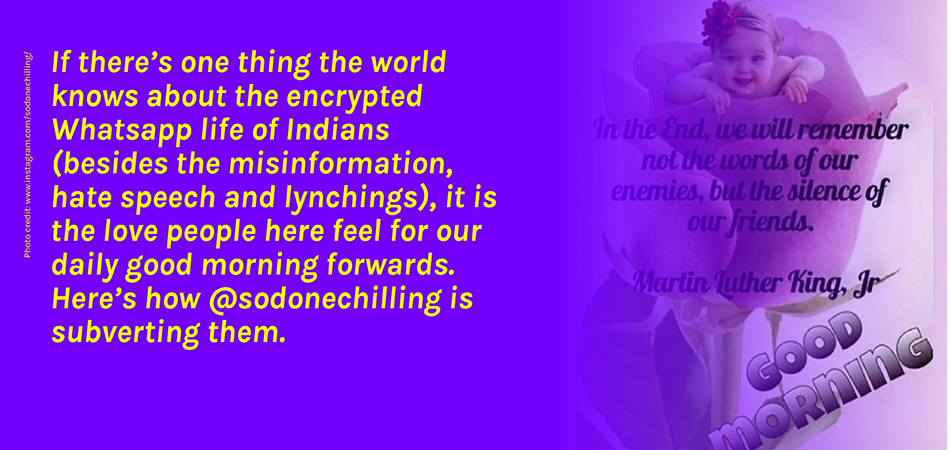
If there’s one thing the world knows about the encrypted Whatsapp life of Indians (besides the misinformation, hate speech, and lynchings), it is the love people here feel for our daily good morning forwards. India’s greeting obsession has not only managed to single-handedly force an entire generation to switch off auto-downloads but also overwhelmed and overloaded Whatsapp’s servers with millions of good morning quotes pictures shared and downloaded every day. Good morning greetings remarkably are one of the most successful internet memes in Indian internet culture. To clarify, according to Limor Shifman internet meme is a,
(a) a group of digital items sharing common characteristics of content, form, and/or stance, which
(b) were created with awareness of each other, and
(c) were circulated, imitated, and/or transformed via the Internet by many users.
The traffic boom caused on websites like goodmorningquote.com and the freshquotes.com, due to the proliferation of the good morning meme, has been reciprocated by the creation of even more content on their pages. A majority of these greeting forwards are in the form of computer-generated images or GIFs with text written over it. Moreover, they are composed of similar content where a greeting is followed/ preceded by a quote, set in contrast to the background depicting highly stylized landscapes or motifs like flowers or religious symbols. The tone and style of communication are (part of stance) commonly that of handing down or sharing knowledge about life, focussing on finding or leading a happy normal life.
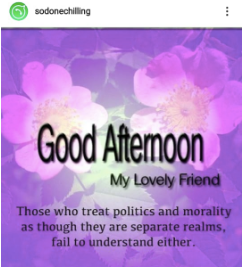
In contrast to this, a few months back in December, the Instagram handle @sodonechilling started the New WhatsApp University to publish content that contests the casual bigotry of Whatsapp forwards. The page parodies the good morning meme and creates socio-politically engaging content to address willful ignorance and biases of family, friends, and acquaintances in Whatsapp groups. One of the account administrators said they’d seen over 10,000 shares in just 48 hours of starting the account. Since then it has grown with people sending in their own versions and sharing them across social media platforms. As one of their team members says,
“People have been sending screenshots of the artworks in their family groups and we have seen or heard of reactions of absolute confusion, upset, astonishment, anger. Sometimes though less often – joy, gratitude, relief,”
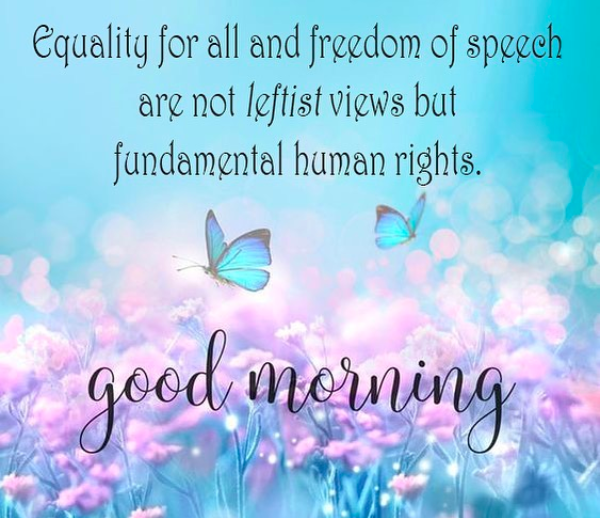
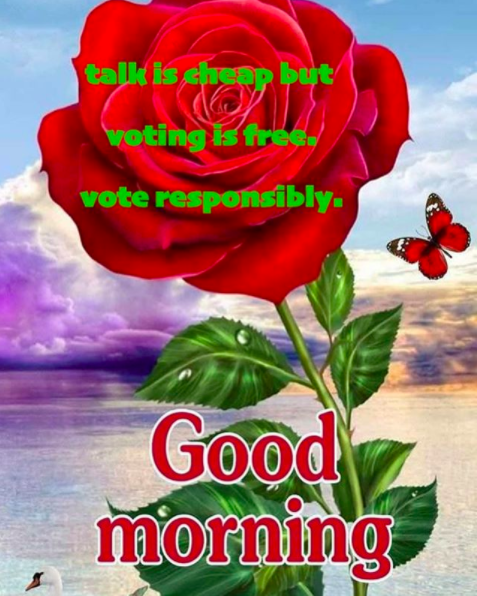
Even though the @sodonechilling posts use the same form, it subverts the good morning meme itself by changing its content and stance. The format replaces the abstract ungrounded quotes with messages about socio-political conduct and ideology. They focus on topical issues like democracy, casteism, islamophobia, misogyny, or simply the systems of oppression that construct the idea of normal for people who are privileged by these systems. The posts imitate the stance of good morning memes which try to portray the addressee as a well-wishing yet distant person sharing objective truths, but in doing so reveals the shallowness and impossibility of such a position. The addressee themselves is always embedded in the social systems and thus either benefitted or disadvantaged by it. At the level of political stance, the New WhatsApp University is a countermeme to the good morning meme.
New WhatsApp University is, what we can call, a political meme. This does not simply mean that the meme is political, but rather that it frontstages politics in its construction and consumption. It is important here to clarify what political means. Politics isn’t just about governance, political leaders, and the electoral processes, but rather the social construction of power itself. As blogger Beth Skwarecki remarks –
“Everything is political, and it always has been. Politics dictates what you can do and say, and what options you have in living your life. As they say, the personal is political.”
Politics is not merely about who your PM or MLA is, but rather who you are and even more so who you can be. A morning greeting telling you that you’re born free hardly does any good if you’re forced every day into a caste occupation or assigned gender, and neither does a quote praising the power of love hold much merit when your family and community can murder you for a non-heterosexual or inter-caste relationship. These unsaid assumptions about the social location of the sender and receiver in the meme are symptomatic of unaddressed privilege which also frames these seemingly apolitical messages. New WhatsApp University brings forth the hidden political assumptions of a non-political meme. As Shifman says,
“political memes are about making a point—participating in a normative debate about how the world should look and the best way to get there.”
New WhatsApp University pushes forward this same debate. As the country goes through massive political turmoil and becomes an increasingly hostile place for minorities and disenfranchised populations, the New WhatsApp University questions the country’s complacent citizens about the facade of apoliticism which is a thin veil over unaddressed and unaccepted prejudice. It asks for moral dictums that stand true not despite but because of political participation. It asks them to acknowledge the cat.
References
Kaur, Nehmat. “CAA: This Instagram Account Helps You Counter Anti-Muslim Whatsapp Forwards”. Huffingtonpost.In, 2019, https://www.huffingtonpost.in/entry/nrc-caa-protest-whatsapp-message-instagram_in_5e00e962e4b0843d35ff8bca.
Reifowitz, Ian. “The Privilege Of Normalcy”. Huffpost.Com, 2014, https://www.huffpost.com/entry/the-privilege-of-normalcy_b_5585483.
Saha, Sneha. “Whatsapp Good Morning Message Mess: 5 Ways To Deal With It Without Offending Anyone”. India Today, 2018, https://www.indiatoday.in/technology/tech-tips/story/whatsapp-good-morning-message-mess-5-ways-to-deal-with-it-without-offending-anyone-1153253-2018-01-24.
Shifman, Limor. Memes in digital culture. MIT press, 2014.
Skwarecki, Beth. “Everything Is Political, And Always Has Been”. Lifehacker, 2017, https://lifehacker.com/everything-is-political-and-always-has-been-1818724298.
“Whatsapp Freezes Because Indians Send Over 100 Crore Good Morning Messages It Just Can’t Handle”. Indiatimes.Com, 2018, https://www.indiatimes.com/technology/apps/whatsapp-freezes-because-indians-send-over-100-crore-good-morning-messages-it-just-can-t-handle-338246.html.
Disclaimer: The memes linked, embedded or mentioned in this blog do not belong to The Meme Project and are not the views of the Meme Project Team. They have been used here to refer to their content or make a statement about their use.
]]>