
I- Hi, I’m Isha Sanekar and I’m an Otaku.
A- Moshi Moshi, Watashi wa FP2-
I- Bro, let’s try to allow the readers to actually understand what we’re saying?
A- Sowwy hehe, hi! I’m Fp2 and I blur the line between an Otaku and a Japanophile.
I- And we welcome you to the ‘Animeme’ show!
A- Did someone say ‘anime + memes’?
I- Naruto speedruns towards that tea.
A- Haha..
How did it begin?
A- Well personally I would have said it all started with manga but anime is actually a form of its own. Sure it is linked to manga, in the sense that most anime start off as manga or light novels in recent years, but anime is its own thing. Out of the oldest anime titles, only Astro Boy was a manga adaptation, while the others like Katsudo Shashin, Uramisha Taro and Imokawa Mukuzo Genkanban no Maki are all anime originals.
I- Yeah, but what sense would it make in context of Indian anime memes?
A- When you look at how anime came to India, it was first through channels like AXN and Star TV which brought in shows like Dragon ball Z and Cardcaptor Sakura followed by other huge shows like Pokemon, Digimon, Doraemon, Shinchan, Kochikame, Kiteretsu and Ninja Hattori which made otakus out of little kids who didn’t even know a term like that existed. I know because I was one of those kids.
I- Yeah so was I!
A- So, I think when anime is memed by modern Indian pop culture, these are usually the most commonly seen. People are just more exposed to and/or comfortable with these anime.
I- It also helps that anime has a wide amount of genres built for different tastes, like Shounen, Shoujo, Hentai, Harem and so on, all with their own target audiences. For Shounen it’s teenage males, for Shoujo it’s young female audiences, while genres like Yaoi feature romance between men, created by and for women. Some of these genres can really give in to the stereotype, with all the hypersexualisation it has.
A- *coughs* Don’t forget Tournament arcs.
I- While there’s space and audiences for all kinds of anime, I personally can’t get behind Hentai that have underage characters. Also dominantly male fandoms of Hentai can become quite sexist, encouraging fanservice that involves rampant objectification. But apart from that, we can’t deny Hentai is meant to be erotic, and people really enjoy that. I mean how can we forget body pillow merchandise?
A- You leave the sacred body bags alone! But I do think modern anime have actually recognised the problem of hypersexualization through the male gaze and have actually curbed this to show some strong female characters. A few notable anime could be Shingeki No Kyojin, Made in Abyss, Burakku Ragūn,Yakusoku no Neverland, Boku Dake ga Inai Machi, Psycho Pass and even Kimetsu no Yaiba. But you’re right about Hentai tropes existing with their own legit viewership.
I- Actually the anime community called it out with ‘Mineta’ from Boku no Hero Academia.
A- God, I hate that guy!
I- I rest my case, your honour.
A- But then I wouldn’t say it’s just hypersexualisation, it’s also anime being simply confused with cartoons and then categorised as kids content, when the reality is a little different.
I- Yes, although, I’ll have to admit, that anime being around in India for almost three whole decades has made a difference by now – people appreciate it as an art form with varying genres suited for different age groups.
A- And they’re providing some quality memes indeed.
I- Haha..

What about some golden memes which are popular even among non-anime fans?
A- Memes always go forward, evolve and progress with the passing ages, it was only a matter of time before people looked back at retro anime and were able to figure out some brilliant sarcastic memes which everyone could relate to, regardless of them being a part of the fandom or not.
I- Although reference loaded meme templates are successful, the internet has seen many anime meme templates that require no prior knowledge of anime at all and everyone could relate to. Some really good examples of these include the “Omae wa mou shindeiru” from Hokoto No Ken; “ok.” from One Punch Man; “Skeleton hand” from Ranma ½’;
A- Not to forget the classics that are the “Over 9000!” meme from Dragon Ball Z, “Surprised Pikachu” from Pokemon, and the “Is this a bird?” template from Brave Fighter Son Fighbird.
I- Yeah, memes do have an interesting history with some major fan-subbing fails. Their enthusiasm to make subtitled anime available for International slangs, can lead to creating more cringe content. They were quite controversial in their own right, y’know.
A- Dude, fansubs were my main introduction to anime.
I- Honestly, same. I remember going through kissanime and looking at those ridiculously coloured subtitles with big outlines drawing all the attention away from the anime.
A- How do you think I have my encyclopedic knowledge of Japanese terminology? It’s because our dear fansubbing overlords often loved to leave out the translations of so many words. (P.S. If any reader speaks fluent Japanese, don’t talk to me in Japanese as I would mostly understand only a few words) And don’t get me started on those footnotes!
I- Oh my god those footnotes! You’d be lucky if you were able to watch the anime and read everything at the same time.
A- I mean, I would just pause the video and read everything, when the pause button didn’t magically disappear. My major problem was them covering up the entire screen.
I- Or, them coming up when they are completely unnecessary.
A- Dude, yes! I think my favourite fansubs are the Karaoke OP’s that help me to properly sing the songs.
I- Nah, I’m just a fan of the subs which write the untranslated words in the subtitles and then add the meaning of the words in footnotes. Pretty much like the ‘Just According To Keikaku’ meme from Death Note.

A- Hahah, I remember watching Nichijou that way. Good god, it made an already funny anime even funnier. But it kinda brings to question here, is it the subbing that we’re laughing at or the language inferiority?
I- Meaning?
A- I’m saying. We laugh so much at fansubs. Is it because the fansubs are truly bad? Is it because we see English as a sort of superior language? Or is it probably just because of bad acting? Where do we draw the line between bad translations and English superiority?
I- I think I understand what you’re trying to say. I think both are at work but in different places and ways. I mean, we need to look at different examples here. If we look at the ‘Just According to Keikaku’ meme, that is just the absurdity of the translation method, or as everyone seems to understand it – bad translation. But if you look at the “Your base are belong to us” meme, that may have some English superiority undertones because the subbing and dubbing people were all Japanese who may not have known English as well, yet they were heavily memed for not speaking correct English.
A- I think ‘K-On! The Movie’ really called out this trope, where they went to America and basically shenanigans ensued when everything got lost in translation. But then again, Japanese is a funky language and English is but a funkier one, words have multiple different meanings and just a few words originally intended to be compliments could suddenly be seen as gross insults, so i think I can probably see many errors being made in translations. Although I must say I have now been transitioning more into just official subs and/or the normal subs as compared to fansubs.
I- GASP! You traitor!
A- Yeah, sorry not sorry, they are less fun, yes. But a lot more accurate. This kinda brings us to the biggest question ….. subs or dubs?
I- Bro NO! We are not fueling that fire!
A- Hahahah.
I- Y’know, we’re saying all this, and how much we love fansubs. But we can’t really ignore how controversial they are and the massive debates they have caused within the communities regarding their culture, intellectual property and of course, their economic impact.
A- Yeah, but isn’t that the whole piracy aspect in general though? It has always begged the question as to who really is benefiting from all of this? Is it the fans, who digitise, translate and distribute? Or is it the anime studios, who actually put so much time and effort into making the anime?
I- Not all anime studios have stayed mum with respect to fansubbing. In 2004, a few anime production industries delivered a letter via a Tokyo law firm to several fansub groups and websites with a warning.
A- And what happened then?
I- Well, it’s not that simple now is it? Because, you can’t really reach these fansubbing sites because they aren’t really sites per say as much as they are a collection of networks. That’s why the redirects exist.
A- So it’s like a hive based system?
I- Kind of, look at bit-torrents as an example, they never really launched a proper website but a series of tiny domains and .io type sites.
A- Come to think of it, I have seen so many pirated anime websites keep switching web addresses constantly- from .io to .mov to so many different styles just cycling around.
I- Like little insects. Ian Condry mentioned in his book, Soul of Anime that it’s rather unsure whether or not creators support this kind of piracy. Many do, many don’t, and for many, it’s just a facade. I remember his interview with Studio Ghibli producer, Toshio Suzui, who tried evading the question of fansubs and when cornered by the question, he just locked eyes with the interviewer and gave a nervous smile suggesting how even anime creators aren’t able to stop the forces of fansubbing and how licensers, distributors & producers anonymously might just be supporting fansubbing and internet is an important tool of the promotion of anime.
A- As much as I enjoy a good Ian Condry reference, I can’t help but feel like you’re kinda calling me as a viewer out though, here with all this scary stuff.
I- Listen, it’s not the viewers committing the crime, it’s the pirates. Such are the piracy laws of the interweb. But that doesn’t mean you close your eyes to the fact that these informal practices still exist. We aren’t sure if creators support them, we just know that many don’t.
A- So what do we, as viewers do? We don’t know if the piracy and fansubs truly supports the industry or if they’re just taking advantage of fans who can’t afford to buy and watch the original animes, and profiting for themselves. Fans like me.
I- I think those who actually have the means to support the industry and anime creators, should do so. It doesnt make you stupid to subscribe to anime streaming platforms like Crunchyroll, Funimation or Netflix.
A- NHentai
I- I’d like to remind you this is a PG13 blog.
A- Too much culture? Sorry.
I- Anyways, the point of this is that meme-ing is also one of these informal, remixing practices – referred to as something called collaborative creativity.
A- Fortune cookie wisdom from dear Senpai!
I- Oh please!

Rise of the Multifandoms
I- I’d consider myself a multifandom person. That is, my interests lie not only in anime, but in other fandoms as well.
A- I don’t think a person exists that’s only interested in one thing. We all are multifandom beings in that sense.
I- True and that really shows in our memes. As India grows more and more digital, we have more access to different media and fandoms and you’d often see a meme that combines two or more of them, for example the Sacred Games-One Piece memes, the Naruto-Marvel memes.

A- Or even the Jojo-Pewdiepie memes.
I- Exactly! Finding memes that pertain to multiple fandoms rather than one is very common in this day and age. so many small youtube channels & instagram pages are releasing crackversions & mematic dub content on their pages. Have you heard of a YouTube channels called anime talks & anime mirchi?
A- I have not
I- So they dub over popular anime clips with awkward and funny scenes from Indian web series, it’s really a laugh riot.
A- Oh really?
I- It basically gives us what desi anime fans have always low-key wanted, Bollywood ishtyle dubbed anime memes.
A- But then how does this affect anime? In the sense that why do think Indians are more into this now?
I- It’s all basic convergence culture. These are all a sort of fan participation or actually, more like fan labour. I remember this article by Ritika Pant where she writes about this, trans-cultural fandoms and how this kind of re-appropriation of stuff in a much more local context is actually a form of fan labour.
A- So it also helps in pushing the anime forward?
I- Pretty much yeah, it always ties to that. However, multifandoms and their related memes help fandoms and cultures of all genres to grow progress. They both help to widen cultural horizons.
A- Hum saath saath hain?
I- Exactly, so when we see all these Mirzapur, Patal Lok memes mixed with anime music or anime images, we’d then watch the show or engage in the fandom just to understand the memes. That seems like some pretty cool free marketing to me.
A- If there’s one thing we broke college kids love, it’s free stuff.
I- Hahaha yeah.
A-Yeah even in my normal day-to-day life, I would just jam to flamingo or caramelldansen while doing any sort of work.
I- you know the caramelldansen dance?
A- every true otaku has done that at least once in their life.
I- Satya vachan. (P.S.- Stop exposing our community like that!)
What is the recipe for Desi Anime Memes?
I- Aaiye dosto, aaj hum seekhenge ek shaandar aur bohot hi simple dish-
A- What are you? Sanjeev Yukihira? (A Sanjeev Kapoor x Food Wars joke in case y’all didn’t get it)
I- more like ‘Chai peelo aunty’, but anime ishtyle.
A- Hello friends, meme banao!
I- The ingredients include –
A popular meme template from anime:

Any mention of relatable pain or relatable schitzengiggles (because desis have always been fan of ‘Kuch Kuch Hota Hai’)

A basic knowledge of current affairs (or lack thereof)

Regular meme fonts like Montseratt, Comic Sans, Impact, Open Sans or even our dear Word Art!

Basic knowledge of Otaku concepts (e.g. senpai, waifu, chan etc.) in the context of desi scenario and culture.

Some editing and graphic effects like traditional wear, ornaments, food & desi characters etc. on the anime character just to show some desiness ( for garnishing).

A- Spoken like a pro indeed.
I- Bachpan se pro, bro.
A- I’ll pretend you didn’t say that and smoothly transition to talking about a few Indian Anime Meme Pages like The Hindu Nationalist Anime Girls page on Facebook which has recently garnered quite some media attention because of their usage of anime memes to make socio-cultural and political commentaries. Similar pages could include Anime Memes for an Indian Otakus and Anime Bhosdi.
Tatparya (Conclusion):
I- At this point, the anime industry and culture in India has made so many achievements. Unofficial fan practices, leading to the burst of popularity, be it fansubbing or fanart
A- Don’t forget piracy is also a huge part of contribution, arguably the biggest. Even what we’re doing right now, this very blog is a sort of unofficial fan practice.
I- Indeed my friend, just like yin-yang (there is good in bad too!). Just as buying pirated CDs on the streets grew the Indian masses’ love for bollywood, pirated anime websites have kept the spirits of the Otakus alive.
A- Yeah, Indian youth has been always trying to balance between flying chappals from parents and scarce pocket money, these sites are like the only bits of happiness we had left.
I- You actually got pocket money?
A- Moving on… even anime merch has become such a huge thing in India. It’s no longer awkward for me to wear anime merch when going out.
I- Nice way to dodge the question but yeah, I do agree, today’s desi anime fans wear the merch representing their favourite anime. There’s this massive sense of pride that comes with showing off something you love a lot.
A- Agreed, it is a sort of cool-ness now, to represent the culture you support, be it through clothes, blogs, fanart and so on.
I- Also the availability of this merch varies from Colaba markets to a custom store in your nearby mall to online stores like Bewakoof, Souled Store, Comicsensexyz, and so on, enjoying anime merchandise is no more of a luxury or something to be ashamed of now.
A- It’s a power. Forget Netflix & chill, Hentai with Senpai is the trend now!

I- Haha, yeah and with the spread of content sharing sites and social media, all these fan practices work as, not only a hindrance and challenges, but rather opportunities for promotion and distribution.
A- Economy101. It kinda reminds me of what Ian Condry calls, ‘dark energy’, where, although he draws parallels to universes and galaxies but he still boils it down to anime, saying the effect is measurable and observable but poorly explained by theories of economic motivation.
I- Condry is a Japanophile elite. Also the multifandoms are bolstered due to the increase in the popularity of anime.
A- Not to mention anime being a huge part of the mainstream Indian pop culture, for example rapper Raftaar who makes many DBZ references in his rap songs.
I- Even many fandom apps like Amino and Discord helping the fandom to take pride as an anime fan & discuss some relevant memes together.
A- Even people outside the fandom have recognised Otakus, Weebs, Japanophiles and everything anime as a true and relevant subculture
I- It is no longer a subculture, it’s a sab-culture!
A- It sure is.

Both- Sayonara!
References
World’s first anime: Katsudo Shashin (1907): https://www.youtube.com/watch?v=4DMQx0dTqbs
Urashima Taro (1918): https://www.youtube.com/watch?v=sZZsjGdCqtM
Imokawa Mukuzo Genkanban no Maki (1917): https://www.youtube.com/watch?v=-KGZLFzXvws
A guide to anime genres: https://www.looper.com/189420/anime-genres-explained/
Review of anime ‘Attack on Titan’: https://myanimelist.net/anime/16498/Shingeki_no_Kyojin
The soul of anime by Ian Condry: https://books.google.co.in/books/about/The_Soul_of_Anime.html?id=iQJ6LwEACAAJ&redir_esc=y
When piracy becomes promotion: https://www.technologyreview.com/2004/08/10/274810/when-piracy-becomes-promotion/
For nostalgic anime memories in India: https://armchairjapanophile.wordpress.com/2014/04/21/animes-entry-into-india-part-i/
About K-on! moviE: https://myanimelist.net/anime/9617/K-On_Movie
Just according to ‘Keikaku’: https://knowyourmeme.com/memes/just-according-to-keikaku
Is This Pigeon Meme a Think Piece?: https://medium.com/new-york-magazine/is-this-pigeon-meme-a-think-piece-ba3880a1fda3
The Internet is filled with ‘Is this a pigeon?’ meme and they are way too real: https://indianexpress.com/article/trending/trending-globally/is-this-a-pigeon-meme-5176299/
Anime meme pages as popular culture in India: https://scroll.in/magazine/847313/these-japanese-anime-girls-are-endorsing-patanjali-products-and-hanging-out-with-narendra-modi
The silver lining of official release of anime movies in India: http://www.businessworld.in/article/Indian-Anime-Movement-Brings-Japan-s-Blockbuster-Weathering-With-You-To-India-/12-09-2019-176036/
Mixed feelings of Indian audience regarding anime: https://www.youtube.com/watch?v=_zNnldjfZUA
Disclaimer: The memes linked, embedded or mentioned in this blog do not belong to The Meme Project and are not the views of the Meme Project Team. They have been used here to refer to their content or make a statement about their use.
]]>In the run up to The Meme Project, we hosted writer, professor and performer Kareem Khubchandani for a chat on Auntologies on 15 May 2020.
Leadership Programme Fellow Kshiti S.V. chats with Kareem about the cultural and ideological spaces shaped by aunties, and how they inform geographies of humour and performance.
Video editor: Nikita Saxena

Bollywood is quite a pervasive entertainment source which has come to play an influential role within the culture of meme-making. We’ve all come across several memes that make references to scenes, actors, songs and stills from Bollywood films to better convey an idea.

Bollywood memes follow a timeline which can be traced right from older film stills to recent ones, acting as meme templates. We want to deep dive into all aspects of Bollywood memes and we’ll start by looking at what could be called camp and retro memes. It’s interesting to look at these templates that have only been used as measures of expressing a sentiment through the meme. We have retro memes that suggest not very contrasting ideas but definitely a different nuance to the humour contained in them. It is interesting how eventually humour and exaggeration from Bollywood, come to be accepted into memetic culture and are widely transmitted as well.

This still from the extremely popular film Deewar, is yet another template that can be used for meme-making! Another instance of a retro meme that went viral in 2017 is quite interesting to look at the ways in which memes are becoming a pervasive influence in the culture we take part in. Here’s an example:

Quite a pressing question, right? Quick to follow were the many memes depicting women taking ownership of their stories, from old Bollywood film templates.
Like this one, challenging the long accepted stereotype of girl jealousies. One more favourite of ours is the string of aunty meme templates that followed, our best pick being this one from Pretentious Movie Reviews followed by this classic Kirron Kher meme:


We may have come across memes that stereotype against people from South India making us believe how they are necessarily darker skinned, speak in heavily accented Hindi and necessarily have oily hair. Such ethnicity-specific stereotypes exist for almost any given ethnicity in India. A lot of memes that make fun of the roles and identities of people of colour are highly prevalent everywhere and are often passed as “dark” jokes; except they are often taken at face value and may perpetuate harmful stereotypes.

This scene and several others from Bollywood films adapted from Chetan Baghat books, make for good meme ‘material’ owing to their adherence with ideas of popular imagination. But they also highlight issues of colourism (as seen above) along with provincialism and can may well be slurs. One example that we thought of is this meme, which went viral soon after the trailer of Half Girlfriend (2017) was released.
Poor English speaking skills are loosely equated with inability and low comprehension, which furthers the idea of the core and periphery of a given region and how that plays into our self-presentation. This is made into something that people can get ridiculed for, like in the following meme. An alternate perspective, as proposed by Ulka Anjaria, is that Bhagat uses a language that is economized and indigenized for everybody to understand. It is provincial, it reserves your faith in your land and doesn’t push you to depart unlike other Indian English authors who have been writing about the other end of the spectrum (read Lahiri, Rushdie). Anjaria argues for Bhagat’s literature as something that standardizes and instills a new degree of faith in the local. In that sense, the virality of this meme template as well as the reception Bhagat’s literature gets, is explanatory.
Another problem that a lot of Bollywood memes need questioning for, is the disproportionate representation of various communities. As if this isn’t enough of a problem, a lot of these representations are often inaccurate and terribly incomplete. To address this, we can look at how a lot of the series of popularly acclaimed films are mostly depictions of the upper class, upper caste populations. These lines between classes and their representation is so flawed and inappropriate calling for problematization of the narratives they seek to further. In a country where the majority struggles to eat one square meal, it is problematic to perpetuate the image of a utopian world and furthers a sense of incompleteness. Memes, as usual, are used as tools that inevitably further this feeling. Such practices perpetuate and make the lines blurry between different classes and their differently enabled social structures.
Struggles sure are based in people’s subjective realities, however the popular ideas of classes are heavily influenced by Bollywood portrayals as well as the film industry, further altering our opinions and understanding of it. This also shows itself in the many Taimur Ali Khan memes based on the inordinate amount of media attention he gets, in terms of the privilege ‘star’ kids have, and how memes often make fun of it. A few examples as below are not even appalling anymore.

While we’re at it, it would be interesting to look at how several Indian TV stills are used as meme templates. The ‘Pooja what is this behaviour’ template became viral in no time, and is one of the very few reality TV stills to escape it’s confined boundaries and become a meme. A similar example is that of the ‘how can she slap’ template that is being used widely.
It is vital to look into how women’s anger on such reality TV shows is perceived to be something ridiculous, and worth applying in multiple contexts. Humour is a fundamental device that memes carry, and it is interesting to read into why women getting angry and snappy becomes material for memes. While there is no condoning violence, it is telling to analyse what is seen as funny versus something seen as threatening – gendered ideas of ‘hysteria’ are often perpetuated through these artifacts. Recently, with Hotstar’s re-telecast of the show Sarabhai v/s Sarabhai, the ‘middle class Monisha’ template has become a rage. It usually features Maya schooling us into challenging several seemingly inappropriate and inaccurate things by calling them middle-class. We appreciate the satire attached to the huge Indian middle class and the schooling that comes with it. At the end of the day, our good old Hansa (from the show Khichdi), and Sarabhai memes could save the day for Indian TV’s presence and contribution to memetic culture. Here’s an example of how these memes address several societal issues.

A few meme pages, however, are a welcome change that make use of Bollywood memes to initiate a movement that challenges stereotypes. It helps to stop their reinforcement in pop culture. These meme pages are using the medium to challenge and break stereotypes usually associated with a specific gender, sexuality, race, class or caste. Some handles like @rayonmag on Instagram take a direct dig into the privileges of Bollywood and make ironic, meme-y posts. This helps reading further into the apparently altruistic and giving nature of all things (and people) Bollywood.
This meme, makes a sly but important remark on every other person, especially celebrities who take a stand against police brutality in the West and almost always keeps mum on such similar inhuman issues back home. It is important to identify, critique and remember institutional violence and this post asks us to reflect on just that.
Another page that challenges several stereotypes that have been fostered by Bollywood (with its Kantabais et al) against the queer community is @desiqueermemes on Instagram. How do they do this? Using Bollywood memes and popular TV vamps like Komolika! Here are a few examples.
Some of these have queered even the typical ‘aunty’ memes, an interesting take towards a more inclusive space.
In another instance, a Facebook page formed by a few students, belonging to marginalized backgrounds- Just Savarna Things, calls out the denial of caste privileges in Bollywood through memes. It makes a call at the “casteless” yet extremely casteist nature of Bollywood. Here are a few examples.


This way of challenging stereotypes is essential in rethinking and eventually relearning. It also helps the particular group in question gain ownership over its own narrative and propagate it truest to their lived realities.
Meanwhile, as we discuss the various types of memes and their use to address issues in the cultural fabric of the country, several brands are capitalizing on memes. Yes, several Bollywood and Indian TV templates are being used to enhance brand value/increase awareness and reach a wider audience. We have a few examples, from a few Instagram handles we know.

Here we find the Mumbai Police, asking people to respect traffic rules in a fun way with this meme.
Netflix India has quite effectively and openly owned their association with Radhika Apte and further capitalized off it, by making more memes as promotion. One such meme template that has not only caught our attention but that of several brands as well, the Maya template from Sarabhai v/s Sarabhai. This was just a sneak peek into how memes have also become a currency in contemporary times. This analysis was solely based on Bollywood and TV meme templates, however several brands use various other templates to enhance their brand value. Such is the potency of a viral, well-received and potent meme. https://www.instagram.com/becurefit/?utm_source=ig_embed

Memes that are made using Bollywood components, can ensure that it rightfully pushes us to question the content and depict its accuracy. Of course, humour is supposed to be received in a certain manner but respect can still be retained and is a good enough cause to advocate for. As proposed by Lab speaker Krishanu B. Neog, we’d like to focus on how memes act as crucial devices for communication. They have attained an important place in pop culture and have become a language in and of themselves. Such tools of communication further our cultural literacy by several notches by adding depth and nuance to it. In a country where the formal literacy industry has been battling the same issues in a viciously circular manner, it is important to pay attention to alternative sources such as cultural literacy. We can better examine the importance of cultural literacy, given the comfort and respite they provide to almost everybody for communication.
References:
The Dawn of the Indian Male Meme: https://www.vice.com/en_in/article/kz5z3z/the-dawn-of-the-indian-male-meme
18 Hilarious Memes that Perfectly Describe hoe Bollywood Logic works: https://www.dailymoss.com/hilarious-bollywood-logic-memes/
The Double Standards of Cultural Appropriation | The Bottom Line: https://thebottomline.as.ucsb.edu/2017/02/how-black-culture-is-exploited-in-memes-copy-headline-plz
Maymay wahi banaenge: Ambiguous Politics in Globalized and Localized Online memetic communities: http://www.fordigitaldignity.com/maymay-wahi-banaenge-i-ambiguous-politics-in-globalized-and-localized-online-memetic-cultures/
Chetan Bhagat and the New Provincialism: https://www.academia.edu/20190572/_Chetan_Bhagat_and_the_New_Provincialism_
@officalmarketingwarrior on Instagram: How brands reacted on Sarabhai’s #MonishaBeta statement, with their own twist: https://www.instagram.com/p/B_XUAzcoDpx/?igshid=oyrgswvwabcc
Disclaimer: The memes linked, embedded or mentioned in this blog do not belong to The Meme Project and are not the views of the Meme Project Team. They have been used here to refer to their content or make a statement about their use.
]]>
“I seem to have run in a great circle, and met myself again on the starting line.”
― Jeanette Winterson
In contrast to the popular use, the term meme was first used by biologist Richard Dawkins to refer to ideas, practices and beliefs which spread from person to person through imitation or copying. Here, it could refer to fashion styles, catch phrases and even concepts like God. Dawkins also noted that memes which help each other replicate bundle together to form a memeplex, for example, regional identity which is constituted by multiple practices and beliefs which are shared amidst the group members. Since the regional identity of a group is also based on difference from other groups, gatekeeping, i.e, the activity of controlling and usually limiting entry, also becomes an essential part of it. This can lead to staunch ideas about who does or does not deserve to be part of the group and resources shared by it. Something which remains an inflaming subject even today.
The rise of the internet brought with itself the promise of a make-believe world and the global phenomenon of digital memes. As customizable and reproducible artifacts, digital memes are a form of participatory culture i.e, culture produced through participation by you. Even though seemingly commonplace, memes can provide us insight into how ‘everyday’ media texts relate to wider social realities. Memes can be used to understand online identities and communities as they act not just as a communication currency but also artifacts which bring together individuals with similar interests.
The term local or regional memes, as the name suggests, can be used to refer to the rich reservoir of memes which are specific/limited to a particular region. The term region is quite vague and can be used to denote something as small as a town to something as wide as a country. The limit of circulation of regional memes is not due to poor content or form of meme but rather due to limitation of the cultural knowledge needed to understand it. Even though one might understand the technical skills and aesthetics of meme creation something more is needed. This is called subcultural literacy, which refers not only to the technical literacy needed to make and understand the meme form, but also the ability to ‘read and write’ in the social language accepted by subcultural insiders. This subcultural identity is based on shared ideas and taste. For example, to understand this meme, one doesn’t only need to know how to read bangla but also the subcultural relation and history between Marlboro cigarettes and the community.
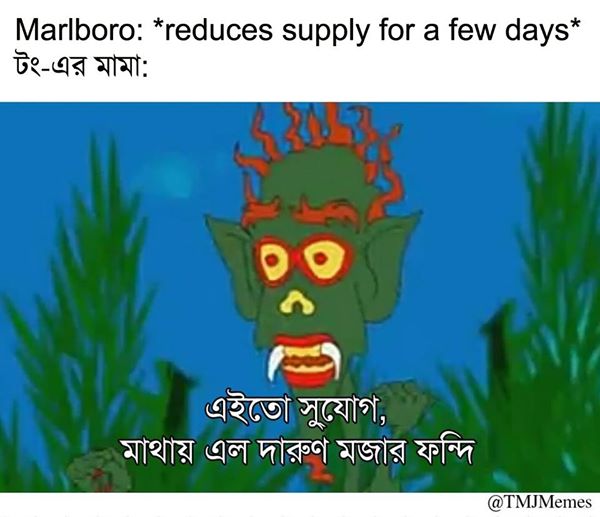
Translation: The caption of the ghost reads: This is the opportunity, I have got a funny idea/ a great time to trick people
Similarly, one needs to understand the specific stereotypes prevalent in Mumbai subculture, along with the lingo and cityspace to understand the second meme, even if one understands English as a medium along with the spongebob reference, to understand the meme.
Memes also act as a tool for self representation and identity formation on online platforms. But this representation is factored by cultural capital. French sociologist Pierre Bourdieau gave the concept of cultural capital which encompasses the advantages of a knowledge of culture and the social implications of cultural taste. “Recognizing and understanding cultural items, references, and codes, along with the ability to implement them independently, generate respect and status from those in one’s social surroundings. Knowing culture in this sense is a form of distinction, in both meanings of the word: setting oneself apart and serving as a mark of honor.” So even though memes, through their relative simplicity, democratize online self-expression, the process in reality is biased towards the privileged who can amass cultural capital and create content relatable towards privileged circles. So, we see the coalescing and splitting of internet communities around shared interests and understanding. Thus, one probably is not as free on the internet as one would like to believe.
Also, memes borrow inspiration from established cultural codes and contexts. And with the intention of imbibing most relatable values, memes can recreate the prejudices and marginalizations of the ‘real’ world.
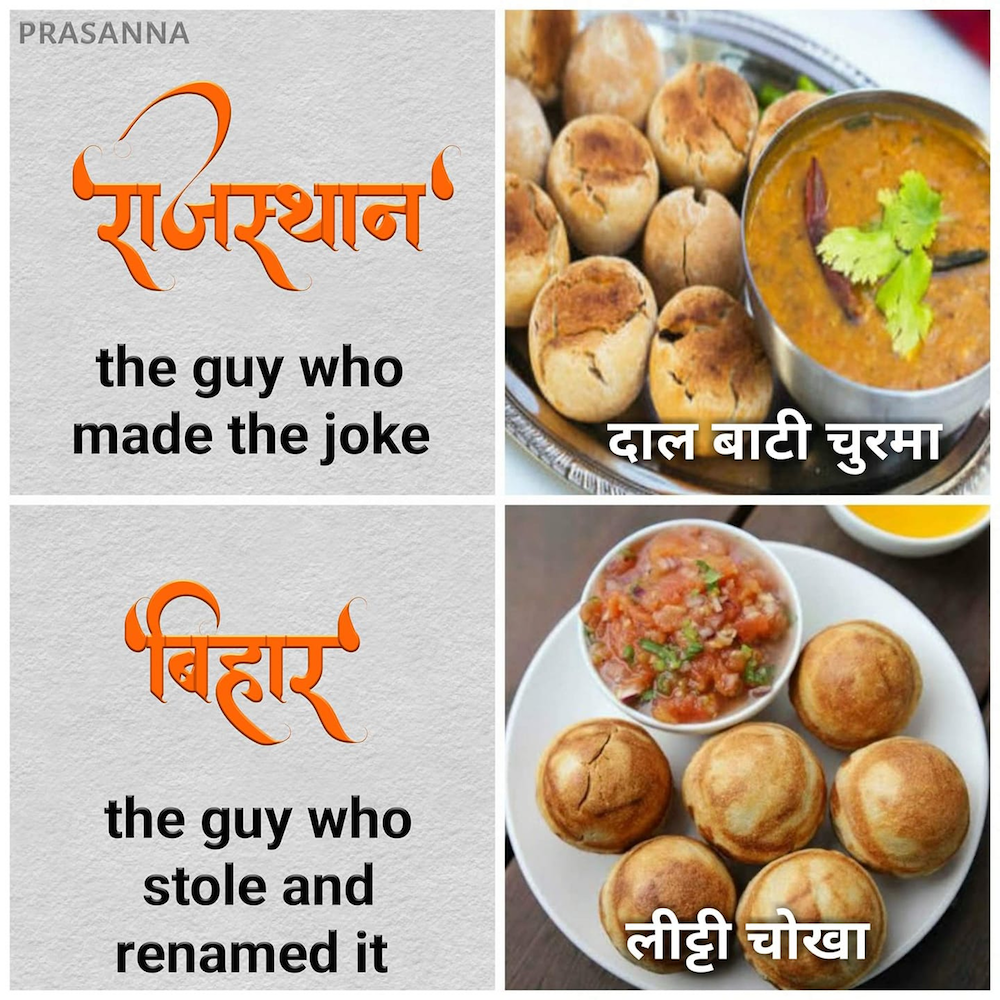
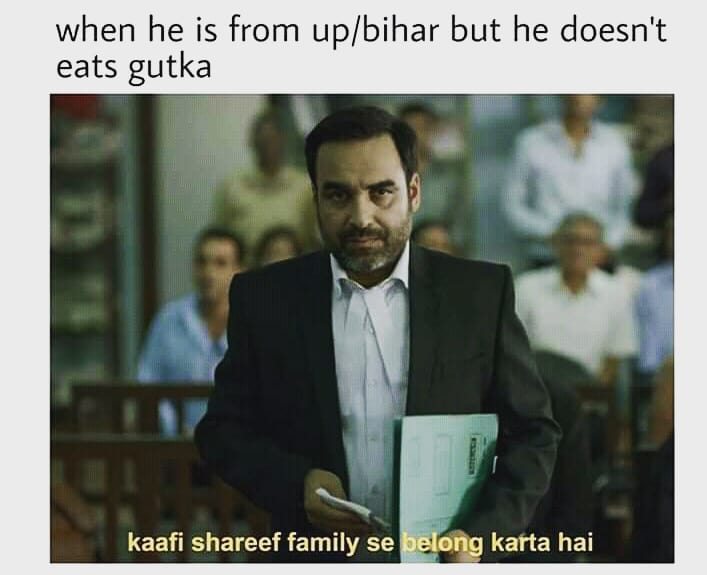
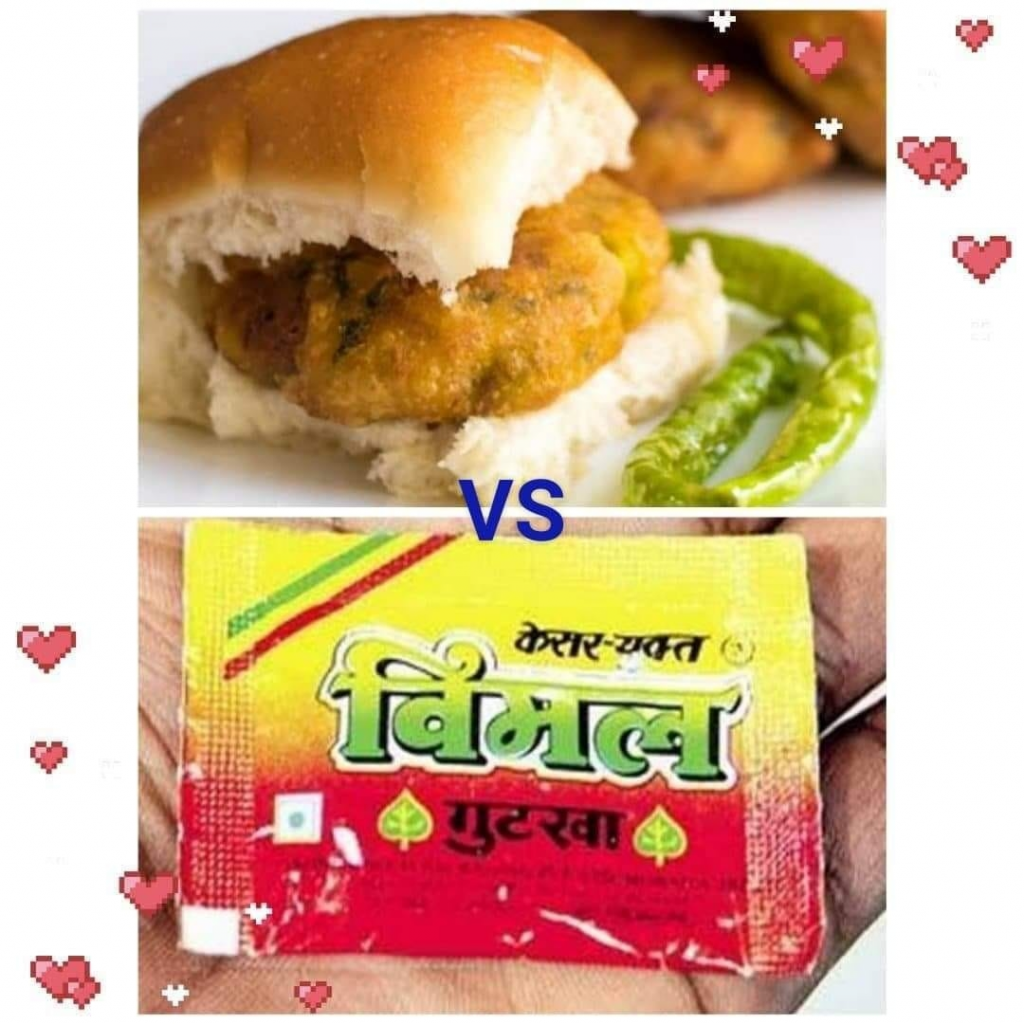
These memes communicate the message not just to ‘in-the-know’ groups, but also to people they alienate, thus signalling towards a shared subcultural knowledge between these two groups as well. For most working middle-class Indians the effort to sustain an idea of normalcy in recent times is somewhat a similar pursuit, trying to sustain faith in systems that discriminates against certain populations. The thought of recent happenings marked by loss of life and liberty being framed as “the normal” by the privileged apolitical seems absurd at best. Similar codes are shared between the immigrants as they confront the history and reality of hostility they face, articulated in the form of stereotyping and dehumanization. All of these huge discourses of identity are created, shared and lived in a single meme. Thus, regional memes can sometimes in excessively overt and sometimes covert ways reassert who is the undeserving. These memes are mere reiterations of already set social dynamics, but with the possibility of a little mutation with each repetition.
Glum as it might seem, but the same meme can also through slightest variation open a world of new readings and discourses. Memes can steer people towards ideologies and communities whose values they don’t share initially. Intentionality or will can prove to help people navigate unknown ideological spaces outside the limits of their identities. Memes do maintain boundaries but can also transcend them in other ways, just like the people who share them, and therein lies their potential.
REFERENCES
Anastasia Denisova. Internet Memes and Society: Social, Cultural, and Political Contexts.
Asaf Nissenbaum and Limor Shifman. “Internet memes as contested cultural capital: The case of 4chan’s/b/board.” New Media & Society
Bihari memes for Maharashtrian Teens https://www.facebook.com/Bihari-memes-for-Maharashtrian-teens-305104860126578/
Limor Shifman. Memes in Digital Culture.
Ryan M. Milner. The world made meme: Discourse and identity in participatory media.
Thakurmar Jhuli Memes https://www.facebook.com/pg/TMJMemes/posts/?ref=page_internal
Townie Trash @southbombaymemes https://instagram.com/southbombaymemes?igshid=3fmqtlv9675h
Disclaimer: The memes linked, embedded or mentioned in this blog do not belong to The Meme Project and are not the views of the Meme Project Team. They have been used here to refer to their content or make a statement about their use.
]]>
It is a truth universally acknowledged, that a mentally frustrated Zoomer/ Millenial in possession of a decent network, must be in want of a relatable meme.
At times a simple internet meme can be the most accessible, concise and brutally honest articulation of something really personal, especially when you feel lonely or unexpressed. In her TEDx talk Emily Sands, a millennial suffering from clinical depression, explains how internet memes can refer to experiences we all have but don’t talk about because they’re embarrassing or taboo, and thus can help us articulate our feelings and connect with others who have similar experiences. Dank mental health memes are no secret, and even though some can go overboard and be dismissive, they have definitely led to a boom of content around mental health and illness which for many still remains a closet issue. Some netizens even go as far as to say that such memes can be therapeutic and help in creating resourceful online communities which help them with problems which are hard for their peers to understand. But what does one even mean by online communities if anonymity and deception are cornerstone practices of the Web? Moreover, how can an innocuous funny picture help me be a part of one?
Community, colloquially, is used to refer to any group of people sharing geography, characteristics, resources or even interests. But the word also carries with itself an undertone of physical affinity or companionship, and a prejudice of being embedded in a ‘face-to-face’ real world. The internet, on the other hand, is the thing which makes young folx walk face first into walls or fall down drains, not collectivize them and create a healthy network and lifestyle. The paranoia against cyberspaces runs wild with people believing that young users are inevitably bound to become addicted and aloof, disconnected from the real world. Barry Wellman and Milena Gulia in their research explain how extreme views, both negative and positive, about the possibility of cyberspace communities fail to understand the dynamic nature of community as a concept. Communities have been changing since the dawn of age and becoming more loose knitted geographically with every advancement in transportation and communication technology. Moreover, according to their research except for kin and small clusters of friends, most members of a person’s community network (in real world) do not really know each other. Interestingly,
“the relationships people develop and maintain in cyberspace are much like most of the ones they develop in their real-life communities: intermittent, specialized, and varying in strength.”
– Peter Kollock and Marc Smith, Communities in cyberspace.
The internet fosters the formation of specialized relationships between netizens for whom they act not just as resources of information but also as support groups for social, physical, and mental problems along with information about treatments, practitioners, and emotional therapy. Despite contrary belief, according to Wellman and Guina, emotional support, companionship, information, making arrangements, and providing a sense of belonging are all non-material social resources that are relatively easy to provide from the comfort of one’s computer. Internet communities, therefore, are legit. Naturally one might ask, so how do these communities work then?
Actually, there is no one specific way of determining how these communities are formed. Other than having the common factor of being virtual, internet communities can be starkly different as their construction and working is dependent on the structure of the platform on which they are built. As Peter Kollock and Marc A. Smith claim, “each online communication system structures interaction in a particular way”. Email lists work differently from chat rooms and subreddits work differently from social media platforms. The difference between platforms can lead to a different form and extent of communication, even different constructions and performances of the ‘self’ as one creates an identity on the platform. Or in other words, one can only do as much as the website would allow; if a site doesn’t let people post anonymously, there’s a great chance that people will be posting differently than if they had the chance to be anonymous.
But what does this have to do with memes?
One becomes part of and shapes the online community by communing or participating in it. According to Limor Shifman, sharing content is now a fundamental part of what participants experience as the digital sphere. Sharing is not just about communicating one’s thoughts but also about distributing content which if resonant with the members of the group is shared, imitated and modified. In other words, memetic activity creates online communities, or as Shifman says “memes shape the mindsets, forms of behavior, and actions of social groups.” People coalesce around memes to form communities as they are social beings who use the net to seek not only information but also social support, companionship and a sense of belonging. For Shifman, this is reflective of the era marked by network individualism where people use memes to simultaneously express both their uniqueness and their connectivity.
A meme, in crux, is also a currency of communication. So, for example, liking and sharing a meme about how anxiety feels, instantly connects you with everyone else who has liked and shared the meme, or in other words has also felt that the meme is relatable to them to some degree. Sharing memes can be about putting yourself out there to let people know how you feel or about letting others who feel the same find you. But it can also be to just have a laugh or in Emily’s words “find people who laugh with me”.
References
Blair, Olivia. “110 Memes That Perfectly Sum Up The Realities Of Social Distancing”. ELLE, 2020, https://www.elle.com/uk/life-and-culture/g31803505/coronavirus-social-distancing-memes/.
Chen, Carl. “The creation and meaning of Internet memes in 4chan: Popular Internet culture in the age of online digital reproduction.” Habitus,(3) (2012): 6-19
Kollock, Peter, and Marc Smith. “Communities in cyberspace.” Communities in cyberspace. Routledge, 2002. 13-34
Sands, Emily. “”More than just a Meme” | Emily Sands | TEDxSantaClaraUniversity.” Youtube, uploaded by TEDx Talks, 6 July, 2017, https://www.youtube.com/watch?v=9u2f44VdzBs.
Shifman, Limor. Memes in digital culture. MIT press, 2014.
“Suicide Memes May Be A Form of Therapy.” Youtube, uploaded by VICE News, 6 Aug, 2017, https://www.youtube.com/watch?v=XxC15gY0A2c.
Wellman, Barry, and Milena Gulia. “Virtual communities as communities.” Communities in cyberspace (1999): 167-194.
Disclaimer: The memes linked, embedded or mentioned in this blog do not belong to The Meme Project and are not the views of the Meme Project Team. They have been used here to refer to their content or make a statement about their use.
]]>